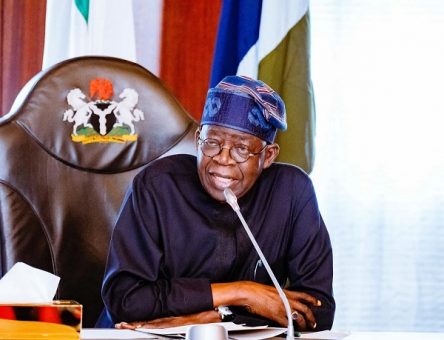
President Bola Ahmed Tinubu has approved a sweeping overhaul of Nigeria’s sports funding structure in a move designed to eliminate persistent bureaucratic delays and improve preparation for international competitions. The directive was announced on Tuesday during a high-level briefing, where the President instructed the Ministry of Finance and the Budget Office to make consistent and
President Bola Ahmed Tinubu has approved a sweeping overhaul of Nigeria’s sports funding structure in a move designed to eliminate persistent bureaucratic delays and improve preparation for international competitions.
The directive was announced on Tuesday during a high-level briefing, where the President instructed the Ministry of Finance and the Budget Office to make consistent and adequate annual provisions for sports development starting from the 2026 fiscal year.
Tinubu said the long-standing pattern of late fund releases has undermined athlete performance and damaged Nigeria’s reputation in global sporting events. He stressed that the era of administrative bottlenecks and last-minute funding arrangements must come to an end.
Funding Reform Under RHINSE Framework
The reform is anchored on the Renewed Hope Initiative for Nigeria’s Sports Economy (RHINSE), a policy framework aimed at repositioning sports as a structured economic sector rather than a casual government obligation.
Beyond financing international travel and competition logistics, the new directive focuses on reorganising how sports funds are managed. Allocations currently spread across multiple Ministries Departments and Agencies will be consolidated into a unified system.
Oversight of the centralised funding framework will fall under the National Sports Commission (NSC) led by Mallam Shehu Dikko.
Shift Toward Sports as Economic Driver
President Tinubu emphasised that sports should be treated as a strategic tool for economic growth, job creation and tourism development.
“Nigerian athletes deserve certainty, not excuses,” he said, underscoring the need for predictable funding cycles that allow federations and athletes to plan effectively.
The President noted that countries with stable sports financing systems consistently outperform those relying on emergency budget releases.
Ending a History of Delays
For years Nigerian athletes and sports federations have complained about delayed funding affecting training camps, travel arrangements and participation in global tournaments.
Officials say the new policy direction aims to end that cycle by ensuring funds are captured early in the annual budget process and released on schedule.
Sports analysts describe the move as one of the most structured funding reforms in Nigeria’s sports history, noting that better planning could improve medal prospects and attract private sector investment.
What This Means Going Forward
The reset signals a transition from reactive funding to long-term financial planning in the sports sector.
With sports now framed as part of the broader national economy, stakeholders expect increased professionalism, improved athlete welfare and stronger international competitiveness.
Implementation guidelines from the Ministry of Finance and the National Sports Commission are expected ahead of the 2026 budget cycle.









Leave a Comment
Your email address will not be published. Required fields are marked with *