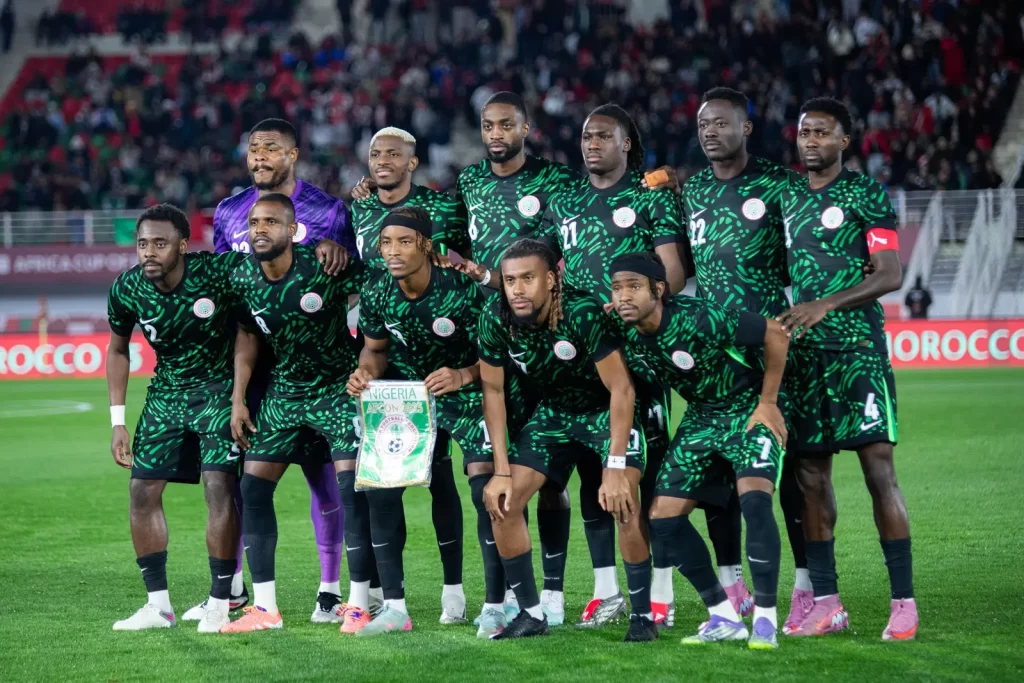
World football’s governing body, FIFA, is expected to deliver a ruling on Monday regarding Nigeria’s petition against the Democratic Republic of Congo over the alleged fielding of ineligible players — a verdict that could significantly alter Africa’s World Cup qualification landscape. The decision, scheduled for February 16, will address the protest filed by the Nigeria
World football’s governing body, FIFA, is expected to deliver a ruling on Monday regarding Nigeria’s petition against the Democratic Republic of Congo over the alleged fielding of ineligible players — a verdict that could significantly alter Africa’s World Cup qualification landscape.
The decision, scheduled for February 16, will address the protest filed by the Nigeria Football Federation (NFF) against the Fédération Congolaise de Football Association. Should Nigeria’s claim succeed, the Super Eagles could be reinstated into the intercontinental play-offs set to take place in Mexico later this month, where one of the final tickets to the 2026 World Cup is up for grabs.
Basis of Nigeria’s Petition
The NFF’s complaint centres on allegations that six Congolese players were ineligible during the 2026 World Cup African play-offs held last year in Morocco — a tie Nigeria lost on penalties.
NFF General Secretary Mohammed Sanusi maintained that the federation would not have proceeded without confidence in its evidence, noting that all necessary documentation and legal arguments were properly submitted.
“We believe we have a strong case; that is why we petitioned. If we didn’t, we wouldn’t have taken this step,” Sanusi said.
Nationality Rules at the Core
At the heart of the dispute are FIFA’s nationality-switching regulations, which permit players to change international allegiance only once and strictly through a documented process approved by the global body.
Nigeria is reportedly arguing that the Congolese FA may have misrepresented facts concerning the nationality status of some players, particularly in light of DR Congo’s domestic laws that prohibit dual citizenship. According to reports, the NFF believes FIFA may have been misled into granting eligibility clearance.
Political Undertones and Possible Appeal
The case has taken on added sensitivity due to reports linking Véron Mosengo-Omba, General Secretary of Confederation of African Football (CAF), to the matter. Mosengo-Omba, a Swiss-Congolese national, is said to maintain close ties with Gianni Infantino, FIFA’s president, further intensifying scrutiny around the case.
Both Nigeria and DR Congo are reportedly prepared to escalate the matter to the Court of Arbitration for Sport (CAS) if dissatisfied with FIFA’s verdict, prompting the governing body to approach the matter cautiously.
What Is at Stake
If the ruling favours Nigeria, the Super Eagles would face the winner of Jamaica versus New Caledonia in Mexico, with a spot at the 2026 FIFA World Cup in the United States, Canada and Mexico hanging in the balance.
Beyond qualification implications, the decision is expected to set an important precedent on how FIFA interprets eligibility disputes in an increasingly globalised football environment shaped by complex nationality laws.
Meanwhile, Chairman of the National Sports Commission, Shehu Dikko, acknowledged that regardless of FIFA’s decision, the matter could ultimately be settled at CAS.
“It requires many processes, and by the time it is concluded, whether Nigeria wins or DR Congo wins, the case could still proceed to the Court of Arbitration for Sport,” Dikko stated.
The NFF formally submitted its petition on December 15, 2025, challenging the eligibility of the six Congolese players who recently switched their international allegiance.









Leave a Comment
Your email address will not be published. Required fields are marked with *