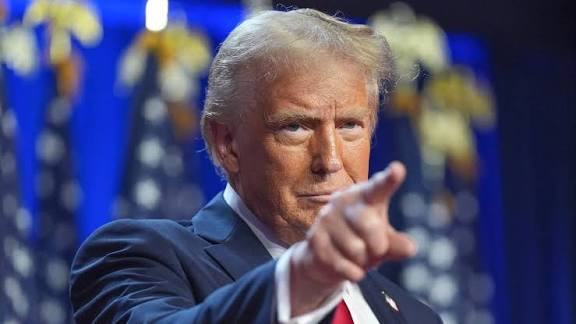
President Donald Trump has sharply criticised the U.S. Supreme Court after the high court struck down his sweeping global tariffs saying the justices who ruled against him are unfit to serve and suggesting without evidence that they are influenced by foreign interests and political opponents, multiple media reports say. The decision represents a major legal
President Donald Trump has sharply criticised the U.S. Supreme Court after the high court struck down his sweeping global tariffs saying the justices who ruled against him are unfit to serve and suggesting without evidence that they are influenced by foreign interests and political opponents, multiple media reports say. The decision represents a major legal defeat for one of his signature economic policies and has triggered intense reactions from Washington to global markets.
On Friday February 20 2026, the Supreme Court invalidated the bulk of Trump’s tariff program in a 6–3 ruling finding that the law he relied on — the International Emergency Economic Powers Act (IEEPA) — did not grant him authority to impose tariff measures of broad global scope without clear congressional approval. The majority opinion, authored by Chief Justice John Roberts, said only Congress holds the constitutional power to create tariffs.
Hours after the ruling, Trump held a fiery press briefing at the White House where he denounced the justices who voted against the tariffs, calling them “afraid of doing the right thing” and “a disgrace to our nation.” He singled out two of his own appointees — Justices Amy Coney Barrett and Neil Gorsuch — for criticism for joining the majority, saying he was “ashamed” and suggesting without evidence they were swayed by foreign interests.
Trump’s remarks, which included questioning the patriotism of certain justices and vowing new trade measures, drew condemnation from legal experts who stressed the independence of the judiciary and constitutional limits on presidential power. The court’s decision emphasised that broad economic actions such as tariffs require clear legislative authority not unilateral executive action.
In response to the court’s ruling, Trump announced plans to impose a 10 percent global tariff under a different statute that permits limited tariff authority for a fixed period while he explores longer-term options and potential congressional support for trade measures. Analysts say this approach could create further legal and diplomatic challenges as the administration seeks to maintain its trade agenda.
The ruling also leaves open questions about whether billions of dollars in tariffs collected under the invalidated measures will have to be refunded to businesses that paid them. Industry groups and trading partners have welcomed the decision saying it restores constitutional checks and balances and reduces uncertainty in international commerce.
The episode underscores growing tensions between the executive branch and the judiciary over the scope of presidential authority and may influence future debates on trade policy, separation of powers and congressional oversight in the United States.


















Leave a Comment
Your email address will not be published. Required fields are marked with *