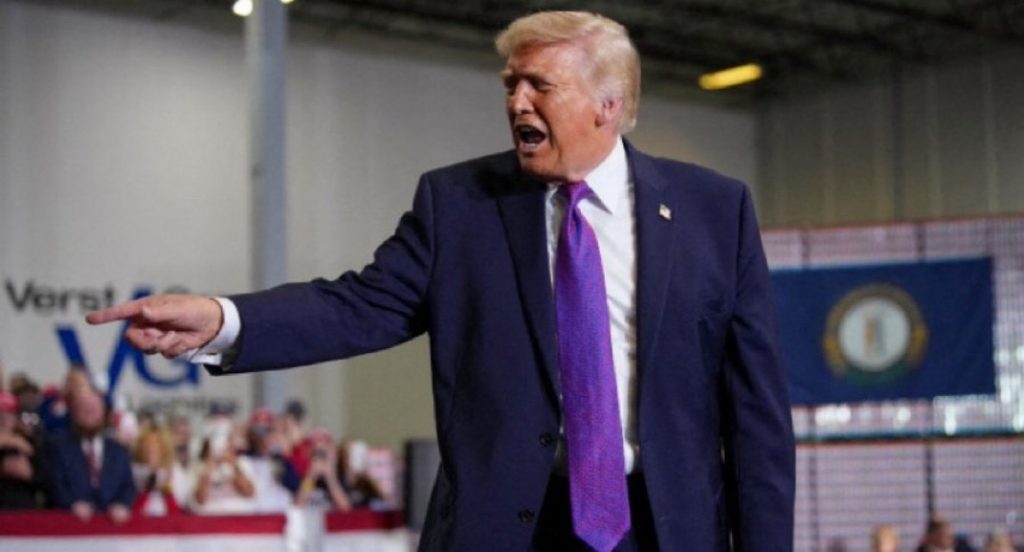
US President Donald Trump has claimed that Iran is eager to reach an agreement to end nearly four weeks of intense conflict, contradicting statements from Iranian Deputy Foreign Minister Abbas Araqchi, who insists no negotiations are taking place. Speaking in Washington, Trump said Iranian leaders are quietly seeking a resolution but fear backlash from their
US President Donald Trump has claimed that Iran is eager to reach an agreement to end nearly four weeks of intense conflict, contradicting statements from Iranian Deputy Foreign Minister Abbas Araqchi, who insists no negotiations are taking place. Speaking in Washington, Trump said Iranian leaders are quietly seeking a resolution but fear backlash from their own people and potential US retaliation.
Araqchi rejected the claim, emphasizing that while indirect communications have occurred through friendly countries, no formal talks are underway. The conflicting statements highlight uncertainty around diplomatic efforts as the war’s economic and humanitarian effects continue to reverberate worldwide.
The closure of the Strait of Hormuz, a key passage for roughly a fifth of global oil and gas, has triggered severe energy shocks. Industries from airlines to food supply chains are facing rising costs and disruptions, while the World Food Programme warns that tens of millions could face acute hunger if the conflict persists.
A 15-point US proposal reportedly sent to Tehran via Pakistan seeks to reopen the Strait of Hormuz, curb Iran’s nuclear and missile programmes, and limit funding to regional allies. Israeli officials remain skeptical, insisting on retaining pre-emptive strike rights under any agreement.
Meanwhile, Iran’s leadership has been reshaped following the death of Supreme Leader Ali Khamenei in an Israeli strike, with his son, Mojtaba Khamenei, assuming leadership but remaining out of public view after being wounded. Military operations continue, with US and Israeli strikes hitting over 10,000 targets, significantly weakening Iran’s capabilities.
Financial markets have reacted with renewed volatility as optimism for a ceasefire fades, and the Pentagon is considering deploying additional troops to the Gulf. United Nations Secretary-General Antonio Guterres warned that the world faces the risk of a wider regional war, calling for diplomacy over further escalation.



















Leave a Comment
Your email address will not be published. Required fields are marked with *