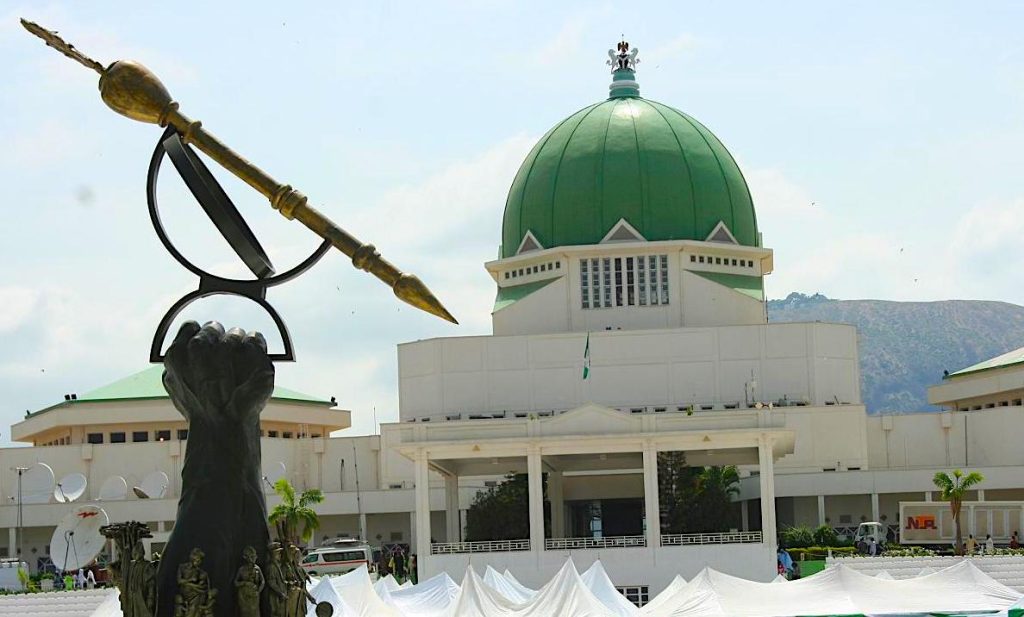
Nigeria’s National Assembly of Nigeria has raised the 2026 Appropriation Bill to ₦68.323 trillion while simultaneously advancing approval for fresh external borrowings totalling $6 billion requested by Bola Ahmed Tinubu. The adjustment comes amid a sharp rise in global oil prices triggered by tensions in the Middle East, with Brent crude climbing to about $115
Nigeria’s National Assembly of Nigeria has raised the 2026 Appropriation Bill to ₦68.323 trillion while simultaneously advancing approval for fresh external borrowings totalling $6 billion requested by Bola Ahmed Tinubu.
The adjustment comes amid a sharp rise in global oil prices triggered by tensions in the Middle East, with Brent crude climbing to about $115 per barrel—nearly double the budget benchmark of $64.85.
Despite the windfall, lawmakers opted to expand spending rather than save excess revenue, increasing the budget by over ₦9 trillion from the initial ₦58.18 trillion proposal.
The revised fiscal plan allocates ₦4.799 trillion to statutory transfers, ₦15.809 trillion for debt servicing, ₦15.427 trillion for recurrent expenditure, and ₦32.287 trillion for capital projects, reflecting a strong push toward infrastructure development.
A major component of the increase includes ₦7.71 trillion carried over from unexecuted 2025 capital projects, many of which were delayed due to revenue shortfalls and administrative bottlenecks.
Additional funding was also approved for key sectors, including rail infrastructure, healthcare interventions, and judicial expansion—partly in preparation for the 2027 general elections.
To finance the expanded budget, the legislature approved a mix of increased revenue projections and borrowing. This includes raising the oil benchmark and projecting higher tax contributions from telecom giants like MTN Nigeria and Airtel Nigeria.
However, the National Assembly also approved an increase in external borrowing, adding about ₦6.163 trillion to cover the funding gap, alongside separate requests for $6 billion in foreign loans.
Among the proposed facilities is a $5 billion financing arrangement with First Abu Dhabi Bank, designed to support budget implementation, refinance existing debts, and fund infrastructure projects. Another $1 billion loan, backed by UK Export Finance, is intended for the rehabilitation of Lagos ports.
While lawmakers defended the move as necessary for economic stability and development, concerns have been raised over Nigeria’s growing debt profile and fiscal discipline.
Former Vice President Atiku Abubakar criticised the rapid approval process, warning that such significant borrowing decisions require thorough scrutiny and accountability.
He cautioned that increasing debt to fund recurrent obligations and existing liabilities reflects deeper structural issues in fiscal management, stressing that “reckless borrowing” could have long-term consequences for future generations.
The National Assembly, however, maintained that the debt level remains manageable and emphasised the need for improved implementation, stronger oversight, and better coordination between the executive and legislature to ensure the success of the ambitious 2026 budget.














Leave a Comment
Your email address will not be published. Required fields are marked with *