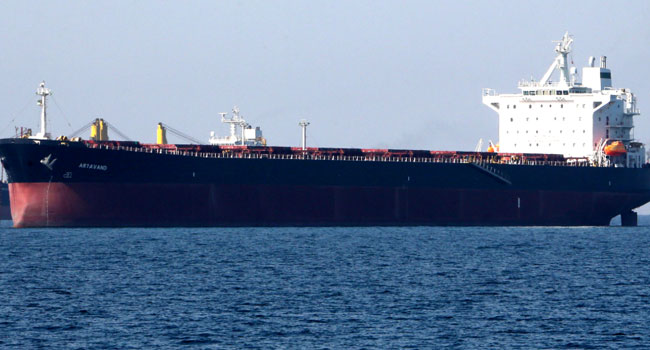
The first ships have successfully passed through the Strait of Hormuz following a ceasefire agreement between Iran and the United States, signaling a cautious return to maritime activity in the critical oil route. According to maritime tracking data, two vessels — the Greek-owned bulk carrier NJ Earth and the Liberia-flagged Daytona Beach — completed their
The first ships have successfully passed through the Strait of Hormuz following a ceasefire agreement between Iran and the United States, signaling a cautious return to maritime activity in the critical oil route.
According to maritime tracking data, two vessels — the Greek-owned bulk carrier NJ Earth and the Liberia-flagged Daytona Beach — completed their transit shortly after the agreement took effect, marking the first confirmed crossings since restrictions were imposed.
Iran had earlier limited access to the strategic waterway in response to tensions and attacks involving the U.S. and Israel, drastically reducing traffic through one of the world’s most important energy corridors.
Officials say the ceasefire includes a two-week window during which ships can pass through the strait under coordination with Iranian forces, although analysts caution that it is too early to conclude that normal operations have fully resumed.
The Strait of Hormuz is a vital global shipping route, handling roughly a fifth of the world’s oil and gas supply, and recent disruptions had led to a sharp decline in vessel movement, leaving hundreds of ships stranded in the Gulf.



















Leave a Comment
Your email address will not be published. Required fields are marked with *