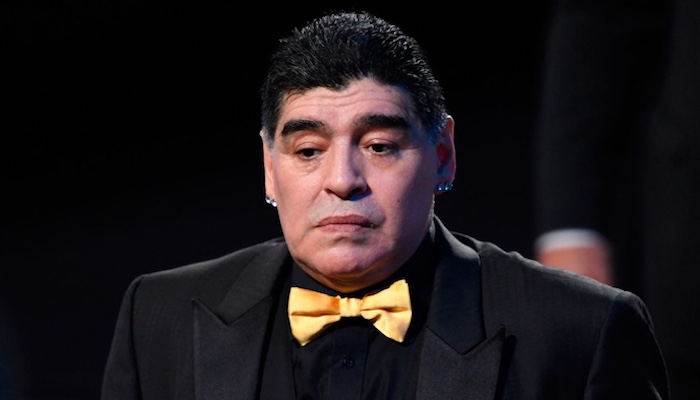
The trial surrounding the death of Argentine football legend Diego Maradona intensified on Thursday as a psychologist testified that the late star suffered from bipolar disorder, narcissistic traits, and required strict avoidance of alcohol. Carlos Diaz, one of seven medical professionals currently facing manslaughter charges with reckless intent, appeared before a court in Buenos Aires,
The trial surrounding the death of Argentine football legend Diego Maradona intensified on Thursday as a psychologist testified that the late star suffered from bipolar disorder, narcissistic traits, and required strict avoidance of alcohol.
Carlos Diaz, one of seven medical professionals currently facing manslaughter charges with reckless intent, appeared before a court in Buenos Aires, stating that Maradona’s mental health condition played a major role in shaping his treatment plan. Diaz, aged 34, is accused of prescribing inappropriate medication in the period leading up to the footballer’s death.
According to reports from local media, Diaz emphasised that Maradona’s condition required a strict zero-alcohol regimen, warning that even small amounts could have serious consequences. He recounted his first encounter with Maradona on October 26, 2020—less than a month before his death—describing how the football icon was seen drinking wine at home.
Diaz told the court that Maradona had shown willingness to improve his lifestyle and that his treatment approach focused on sobriety. He also referred to toxicology results, which indicated that Maradona had not used drugs for 23 days before his death.
Maradona, widely considered one of football’s greatest figures, had a celebrated career featuring clubs like Boca Juniors, Barcelona, and Napoli, and led Argentina to victory at the 1986 FIFA World Cup. He passed away on November 25, 2020, at the age of 60, shortly after undergoing surgery for a subdural haematoma.
The ongoing proceedings are examining whether members of his medical and caregiving team bear criminal responsibility for his death. Neurosurgeon Leopoldo Luque, who also testified, defended the decision to manage Maradona’s care at home, stating that the arrangement was not designed to function as an intensive care unit.
As the trial continues, it remains a major point of public interest in Argentina, sparking wider debate about medical responsibility and the treatment of high-profile individuals.

















Leave a Comment
Your email address will not be published. Required fields are marked with *