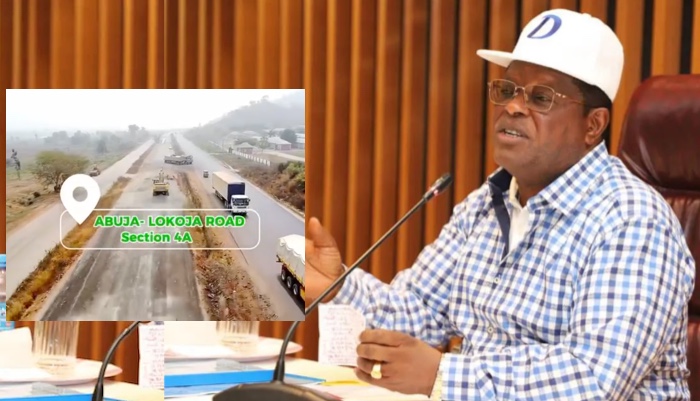
The Federal Ministry of Works has reiterated its resolve to rehabilitate the deteriorating Abuja–Lokoja highway, with Minister of Works, David Umahi, pointing to funding limitations as the biggest hurdle affecting infrastructure delivery across Nigeria. He disclosed this during a high-level meeting with the Kogi State Commissioner for Works, Salam Ozige Deedat, where both federal and
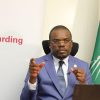
The Federal Ministry of Works has reiterated its resolve to rehabilitate the deteriorating Abuja–Lokoja highway, with Minister of Works, David Umahi, pointing to funding limitations as the biggest hurdle affecting infrastructure delivery across Nigeria.
He disclosed this during a high-level meeting with the Kogi State Commissioner for Works, Salam Ozige Deedat, where both federal and state authorities agreed to strengthen collaboration to fast-track critical road development projects in the state.
Umahi stressed that despite what he described as unprecedented levels of road construction and rehabilitation under the current administration, insufficient funding continues to be the primary constraint nationwide.
Focusing on the Abuja–Lokoja corridor, he explained that the long-neglected road is now undergoing extensive reconstruction, with multiple contractors handling different sections, according to a statement from the ministry.
He revealed that a 48-kilometre section previously handled by Bulletine Construction is being redesigned with concrete pavement for improved durability and cost efficiency, while an 86-kilometre stretch earlier executed by Gitto has been re-awarded.
He added that other segments, including a 56-kilometre portion, are also being converted from asphalt to concrete after contractors agreed to adopt more durable construction methods within existing budgets. In addition, about 50 kilometres of the road have been split among firms such as JRB and Trucrete to accelerate progress.
Umahi further noted that contractors including CGC, CCECC, BUA, and CBC are actively working on various portions, with several sections already completed or ongoing using concrete pavement technology.
He explained that the shift from asphalt to concrete is intentional, as asphalt roads tend to deteriorate faster due to water penetration and weak shoulder protection, whereas concrete roads offer longer lifespan and lower maintenance costs.
On security concerns, the minister highlighted the connection between road conditions and safety, stating that poor infrastructure can worsen insecurity. He disclosed that the ministry is considering installing solar-powered lighting and CCTV surveillance systems along key highways, including the Abuja–Lokoja Expressway, to improve monitoring and response.
He added that similar safety measures would be extended to other major road corridors nationwide.
Providing updates on other national projects, Umahi mentioned the Trans-Saharan Highway, which passes through Kogi, Benue, and Nasarawa states before terminating in Abuja. He also referenced the Makurdi–9th Mile corridor and the Kabba–Ado Ekiti road project, noting that several initiatives fall within the 2024–2026 budget cycle, with funding already provided in some cases.
The minister called for stronger cooperation between federal and state governments, urging sub-national authorities to support federal efforts through maintenance and basic interventions where needed. He also encouraged wider adoption of concrete pavement and reinforced mesh technology as sustainable solutions for Nigeria’s road infrastructure.
In his remarks, the Kogi State Commissioner for Works praised ongoing federal interventions, particularly along the Abuja–Lokoja–Okene corridor, noting that while past administrations contributed to the projects, recent efforts under President Bola Tinubu have shown greater visibility and impact.
However, he raised concerns about delays in some project sections, especially those involving flyover construction, which he said have worsened traffic congestion and require urgent attention.
He also identified other key routes needing intervention, including Okene–Ajaokuta and Takete–Mopa–Isanlu–Egbe towards Kwara State, as well as the Lokoja–Okene corridor, stressing the urgency of accelerated work given Kogi State’s strategic connection to the Federal Capital Territory.






Leave a Comment
Your email address will not be published. Required fields are marked with *