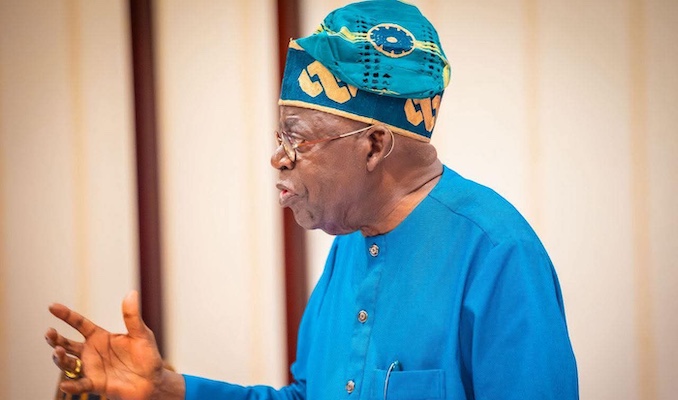
President Bola Ahmed Tinubu has declared a national emergency on poverty and insecurity, a move that has sparked strong reactions from labour unions and opposition leaders demanding urgent and far-reaching reforms. The declaration was made during the 2026 May Day celebration in Abuja, where the President—represented by the Secretary to the Government of the Federation—acknowledged
President Bola Ahmed Tinubu has declared a national emergency on poverty and insecurity, a move that has sparked strong reactions from labour unions and opposition leaders demanding urgent and far-reaching reforms.
The declaration was made during the 2026 May Day celebration in Abuja, where the President—represented by the Secretary to the Government of the Federation—acknowledged that worsening insecurity and economic hardship remain major obstacles to national stability and workers’ welfare.
Tinubu outlined measures his administration has taken under its reform agenda, including cash transfer programmes reaching millions of vulnerable households, job creation through infrastructure projects, and the launch of a community security initiative employing tens of thousands of youths.
He also pointed to improvements in workers’ welfare, such as the implementation of a new minimum wage, payment of pension arrears, and the reintroduction of gratuities. According to him, over 800,000 informal workers have been enrolled in pension schemes, while small businesses are benefiting from government support funds.
Despite these assurances, organised labour—led by the Nigeria Labour Congress (NLC) and the Trade Union Congress of Nigeria (TUC)—expressed dissatisfaction with current economic realities.
They warned that their support ahead of the 2027 elections would depend on political parties committing to key demands, including improved security, free education, accessible healthcare, and stronger protection for workers.
Labour leaders criticised what they described as “paper growth without real impact,” arguing that economic reforms have not translated into better living conditions for ordinary Nigerians. They called for a shift toward a production-driven economy that prioritises local industries, agriculture, and affordable financing for small businesses.
Opposition figures also weighed in. Peter Obi emphasised the need for competence in leadership selection, while David Mark pledged improved wages for workers if his party gains power. Former Vice President Atiku Abubakar criticised the administration, accusing it of worsening living conditions through poor policy decisions.
Tinubu, however, maintained that his government is addressing the challenges through a coordinated approach involving agriculture, infrastructure, and social protection programmes. He linked improved security to economic growth, stressing that stability is essential for job creation and national development.
He also urged labour unions to prioritise dialogue over industrial action, stating that strikes should be a last resort.
As Nigeria moves closer to the 2027 elections, the declaration—and the reactions it has triggered—highlight growing pressure on the government to deliver tangible improvements in security, economic stability, and quality of life.











Leave a Comment
Your email address will not be published. Required fields are marked with *