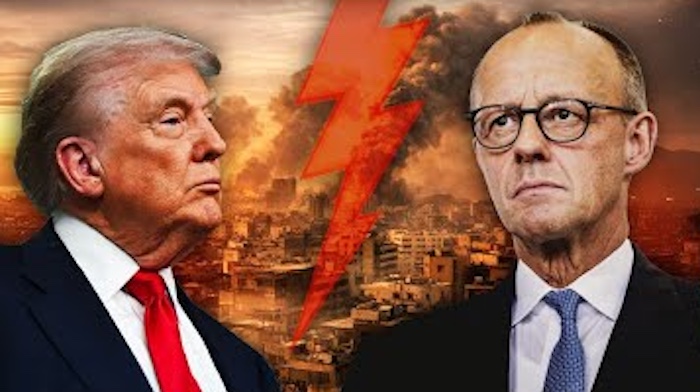
European officials say efforts to maintain strong US involvement in NATO are facing renewed uncertainty after Donald Trump ordered the withdrawal of about 5,000 American troops from Germany. The decision has heightened tensions between Washington and its European allies, particularly amid disagreements over the Iran conflict and defence burden-sharing within the alliance. While NATO officials
European officials say efforts to maintain strong US involvement in NATO are facing renewed uncertainty after Donald Trump ordered the withdrawal of about 5,000 American troops from Germany.
The decision has heightened tensions between Washington and its European allies, particularly amid disagreements over the Iran conflict and defence burden-sharing within the alliance.
While NATO officials had anticipated calls for Europe to take on greater defence responsibility, concerns have been raised over the lack of prior consultation, with US officials reportedly linking the move to criticism from German Chancellor Friedrich Merz.
German lawmaker Siemtje Moeller warned that the decision sends a negative signal about the reliability of long-standing alliances, suggesting partnerships could be subject to sudden policy changes.
Additional concern followed the cancellation of plans to deploy long-range US Tomahawk missiles to Germany, reversing an agreement reached under former President Joe Biden.
Tensions have also been fuelled by Trump’s criticism of European allies for what he described as insufficient support in the Iran war, alongside suggestions that the US could reconsider its commitment to NATO’s collective defence clause.
The alliance has faced further strain after remarks about taking Greenland from Denmark, another NATO member, although Secretary General Mark Rutte has worked to ease immediate tensions.
European officials are now wary of further disruptions ahead of a NATO summit scheduled in Ankara in July, especially if the Iran conflict continues.
Despite concerns, analysts say Europe remains reliant on US military capabilities, prompting continued cooperation from countries such as Britain, France, Germany, and Italy in supporting operations linked to the conflict.
At the same time, divisions within Europe have become more visible, with countries like France, Germany, and Spain openly criticising the war, while eastern members maintain a more cautious position due to security concerns involving Russia.
NATO leadership has urged unity, warning that internal disagreements and anti-war rhetoric could weaken the alliance during a critical period.















Leave a Comment
Your email address will not be published. Required fields are marked with *