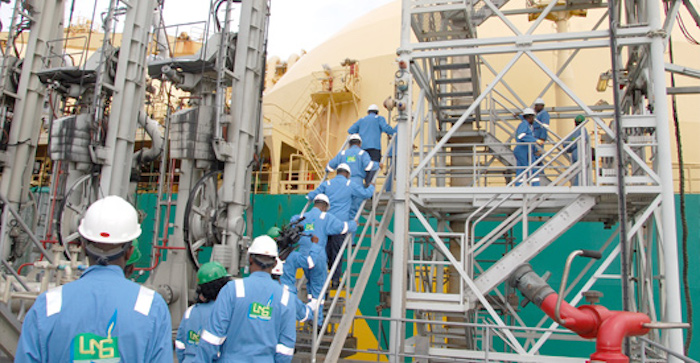
Nigeria’s $5 billion NLNG Train 7 project is nearing completion, with construction now over 92% done as the country pushes deeper industrial growth, local manufacturing, and indigenous participation in the oil and gas sector. Project officials disclosed that the massive gas expansion project has moved into its pre-commissioning phase and is expected to increase NLNG’s
Nigeria’s $5 billion NLNG Train 7 project is nearing completion, with construction now over 92% done as the country pushes deeper industrial growth, local manufacturing, and indigenous participation in the oil and gas sector.
Project officials disclosed that the massive gas expansion project has moved into its pre-commissioning phase and is expected to increase NLNG’s production capacity from 22 million tonnes annually to 30 million tonnes once operational.
The project, backed by NNPC, Shell, TotalEnergies, and Eni, survived years of delays before construction fully accelerated after the 2019 Final Investment Decision and continued through the COVID-19 pandemic under the Saipem-Chiyoda-Daewoo consortium.
NLNG executives said Train 7 became more than just a gas project, describing it as a major test of Nigeria’s local content ambitions.
Several Nigerian companies, including Dorman Long, Coleman, African Industries, Mecom, and Cable Metal, supplied structural steel, electrical cables, fabrication services, and other critical materials used on the project.
According to officials, the project directly employed more than 13,000 Nigerians at peak construction, while thousands of workers received specialised technical training in welding, electrical installation, scaffolding, and fabrication.
The Nigerian Content Development and Monitoring Board (NCDMB) also revealed that local participation in the oil and gas industry has grown significantly since the 2010 Local Content Act came into effect.
The board said upstream operating firms increased from fewer than 10 companies to 117, while service companies expanded to over 11,700, creating more than 129,000 jobs across the sector.
Despite the progress, NLNG warned that the gains achieved through Train 7 could disappear if Nigeria fails to sustain investment in oil, gas, refining, petrochemicals, and industrial infrastructure after the project’s completion.
Officials cautioned that fabrication yards, skilled labour, and local manufacturers built around the project could struggle without new projects and long-term industrial planning.
Industry regulators meanwhile said Nigeria was gradually transitioning from being mainly a crude oil exporter into a processor and exporter of refined energy products, with recent investments in gas infrastructure, petrochemicals, modular refineries, and the Dangote Refinery reshaping the country’s energy landscape.














Leave a Comment
Your email address will not be published. Required fields are marked with *