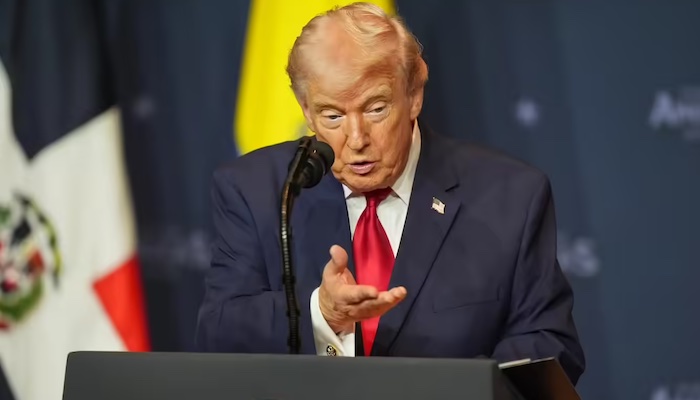
The United States and Iran are reportedly nearing an agreement that could bring an end to the ongoing Gulf war, reopen the Strait of Hormuz and require Tehran to surrender its stockpile of highly enriched uranium, regional officials told The Associated Press on Sunday. Despite the progress, US President Donald Trump said he had instructed
The United States and Iran are reportedly nearing an agreement that could bring an end to the ongoing Gulf war, reopen the Strait of Hormuz and require Tehran to surrender its stockpile of highly enriched uranium, regional officials told The Associated Press on Sunday.
Despite the progress, US President Donald Trump said he had instructed American negotiators “not to rush into a deal.
”According to Trump, discussions between both countries were moving forward “in an orderly and constructive manner,” while relations between Washington and Tehran had become “more professional and productive.” He also dismissed pressure from some Republican allies calling for a more aggressive stance against Iran.
Although negotiations have advanced significantly, a source familiar with the talks said no agreement would be signed on Sunday. The source, who spoke anonymously because they were not authorised to comment publicly, noted that both countries had previously come close to reaching an agreement before negotiations later stalled.
The possible reopening of the Strait of Hormuz is expected to ease the global energy crisis triggered after US and Israeli strikes on Iran on February 28 led Tehran to effectively shut down the strategic waterway. The closure caused major increases in oil, gas and shipping prices worldwide, with experts warning it could still take weeks or months for markets to fully stabilise even after the route reopens.
The AP also reported that the United States has maintained a blockade on Iranian ports for more than a month, with Trump insisting the restrictions would remain until a final agreement is officially reached, verified and signed.
One official directly involved in the negotiations said additional talks would determine how Iran disposes of its enriched uranium during a proposed 60-day implementation period. Part of the uranium could reportedly be diluted, while the remaining stockpile may be transferred to another country, with Russia offering to take custody of it.
According to the International Atomic Energy Agency (IAEA), Iran currently possesses 440.9 kilograms of uranium enriched up to 60 per cent purity — a level considered technically close to weapons-grade enrichment.
Iran has yet to publicly agree to surrendering the uranium stockpile, one of Trump’s key demands. However, Iranian President Masoud Pezeshkian said Tehran was prepared “to assure the world that we are not after a nuclear weapon.
”Iran has consistently maintained that its nuclear programme is intended for peaceful purposes despite enriching uranium to levels approaching weapons-grade capability.
US Secretary of State Marco Rubio, speaking during a visit to India, said “significant progress, although not final progress,” had been achieved in the negotiations, adding that the international community would no longer fear Iran obtaining nuclear weapons if the agreement succeeds.
Rubio told India Today that the immediate priority was the full reopening of the Strait of Hormuz, while the next phase would focus on Iran formally committing never to develop nuclear weapons, accepting long-term limits on uranium enrichment, and resolving the issue of its highly enriched uranium stockpile.
Trump is reportedly seeking broader concessions from Iran than those contained in the 2015 nuclear agreement negotiated during former President Barack Obama’s administration — a deal Trump later withdrew the US from.
On Saturday, Iranian Foreign Ministry spokesman Esmail Baghaei said there were now “narrowing differences” between the positions of Tehran and Washington, though he stressed Iran remained cautious after being attacked twice within the last year during previous nuclear negotiations.
Under the emerging proposal, regional officials said the Strait of Hormuz would gradually reopen as the United States simultaneously eases its blockade measures.
The draft agreement would also reportedly allow Iran to resume oil exports through sanctions waivers, while discussions on sanctions relief and the release of frozen Iranian assets would continue during the 60-day negotiation window.
Officials further disclosed that the proposed deal includes plans to end the conflict between Israel and the Iran-backed Hezbollah group in Lebanon, which erupted shortly after the Iran war began.















Leave a Comment
Your email address will not be published. Required fields are marked with *