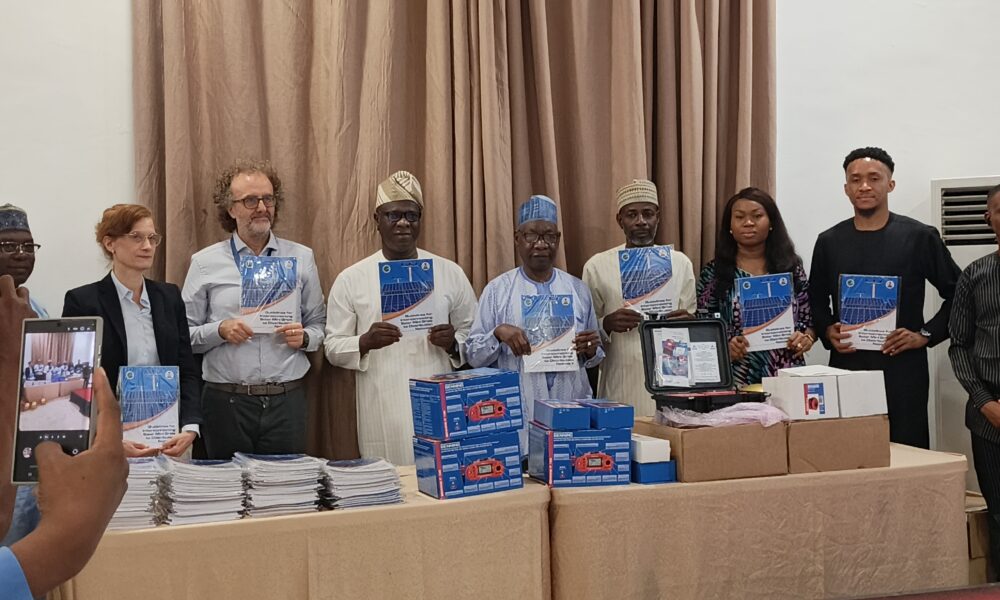
The Federal Government, through the Nigerian Electricity Management Services Agency (NEMSA), has introduced new national guidelines designed to connect solar mini-grids with Nigeria’s electricity distribution network. The initiative, supported by the German Government and the European Union under the Nigerian Energy Support Programme (NESP), aims to improve electricity access while ensuring the safe and efficient
The Federal Government, through the Nigerian Electricity Management Services Agency (NEMSA), has introduced new national guidelines designed to connect solar mini-grids with Nigeria’s electricity distribution network.
The initiative, supported by the German Government and the European Union under the Nigerian Energy Support Programme (NESP), aims to improve electricity access while ensuring the safe and efficient integration of renewable energy systems into the national grid.
Speaking at the launch in Abuja, NEMSA Managing Director, Olusegun Adesayo, described solar mini-grids as an important solution for supplying power to communities that remain underserved or unserved. He noted that the new guidelines provide clear technical requirements and operational standards to maintain grid stability, power quality, reliability and public safety.
Adesayo said the framework would reduce uncertainty for investors and developers while encouraging stronger cooperation among distribution companies, regulators and mini-grid operators.
Representing the Ministry of Power, Permanent Secretary Mahmuda Mamman said renewable energy remains central to the government’s strategy for expanding electricity access and strengthening energy security. He added that the guidelines would help create a more reliable and investor-friendly environment for the growing mini-grid sector.
EU Head of Cooperation, Massimo De Luca, stressed the need for strict compliance with technical standards, noting that proper integration of privately developed mini-grids is essential to delivering dependable electricity services to communities.
Germany also reaffirmed its commitment to supporting Nigeria’s efforts to expand sustainable energy access, strengthen institutions and attract private-sector investment into the power sector.
















Leave a Comment
Your email address will not be published. Required fields are marked with *