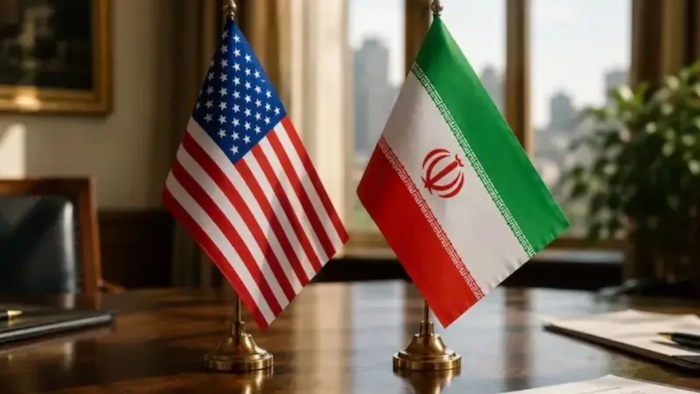
The United States military says it has launched strikes on dozens of Islamic Revolutionary Guard Corps (IRGC) targets in Iran after Tehran fired ballistic missiles at American forces stationed across the Middle East. According to the US Central Command (CENTCOM), the two-hour operation began at 0000 GMT and concluded at 0200 GMT on Thursday. The
The United States military says it has launched strikes on dozens of Islamic Revolutionary Guard Corps (IRGC) targets in Iran after Tehran fired ballistic missiles at American forces stationed across the Middle East.
According to the US Central Command (CENTCOM), the two-hour operation began at 0000 GMT and concluded at 0200 GMT on Thursday. The strikes targeted military command centres and drone facilities.
In a statement, CENTCOM said the operation was intended to further reduce threats posed by Iran and its proxy groups to American troops, commercial shipping routes and neighbouring Gulf nations.
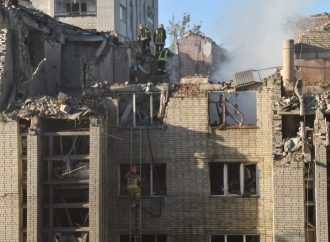
Iranian state media reported that three people were killed during the US strikes on Qeshm Island.
Jordan’s armed forces also announced that they intercepted five Iranian missiles heading toward the kingdom on Thursday.
The latest US action came after Iran confirmed on Wednesday that it had launched ballistic missiles at American troops in Jordan. CENTCOM said all the missiles were successfully intercepted, noting that US bases in Jordan have increasingly come under attack from Iran.
Earlier on Wednesday, American and Saudi forces also carried out strikes against Iran-backed groups in eastern Iraq in response to drone attacks launched from Iraqi territory against Saudi oil facilities. The joint operation marked the first time Saudi Arabia had publicly participated in military strikes alongside the United States.
In Egypt, British maritime security firm Ambrey reported that a drone struck a US-owned gas storage tanker at the Mediterranean port of Damietta. Egypt’s Petroleum Ministry confirmed that a fire broke out at the port but neither confirmed a drone strike nor identified those responsible.
The recent military operations in Iraq and Egypt have heightened fears that additional countries could become involved in the conflict after Yemen’s Iran-backed Houthis announced a naval blockade on Saudi Arabia last week.
The conflict began in February when the United States and Israel launched a bombing campaign against Iran. A ceasefire reached in June later collapsed following renewed clashes centred on the Strait of Hormuz.
US President Donald Trump said Washington would respond firmly to Iran’s missile attacks on American forces but maintained that the United States remained committed to pursuing a peace agreement to end the conflict.
The Strait of Hormuz, through which around one-fifth of the world’s oil and liquefied natural gas previously passed, has become a key sticking point in ongoing peace talks.
Iran said on Wednesday that it targeted three tankers attempting to transit the strait through what it described as an unauthorised route, insisting it maintains control over the waterway. According to Reuters, Tehran also rejected an Omani proposal, backed by Gulf states, to manage the strait through voluntary transit fees.
Oil prices surged on Wednesday, with Brent crude rising by more than eight per cent to above $90 per barrel, before easing slightly on Thursday.
In Iraq, the Popular Mobilisation Forces said the US-Saudi strikes killed at least 20 members and wounded 32 others across several of its bases.
The Iraqi presidency condemned the attacks as “an unacceptable attack and a flagrant violation of Iraq’s sovereignty,” while also calling for an end to attacks by armed groups against Iraq’s neighbouring countries.
Iran denied directing attacks from Iraqi territory, although Iranian newspaper Hamshahri reported that four Revolutionary Guards advisers were killed during the strikes.
Following the latest developments, Saudi Defence Minister Prince Khalid bin Salman met with US Vice President JD Vance in Washington on Wednesday and urged the Trump administration not to expand the conflict by launching additional strikes against Yemen’s Houthis or Iran-backed militias in Iraq, according to two Reuters sources.
One of the sources warned that any further military escalation could expose the region to “major unknown risks.”











Leave a Comment
Your email address will not be published. Required fields are marked with *