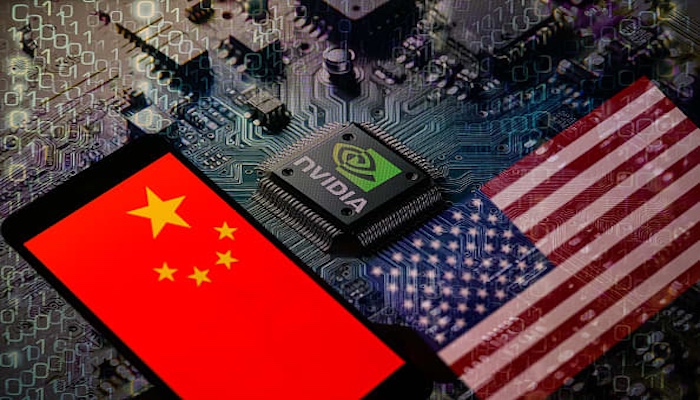
The United States has introduced tougher export controls aimed at preventing Chinese companies from obtaining advanced artificial intelligence chips through overseas subsidiaries and third-party channels. The new directive from the US Department of Commerce clarifies that export licensing requirements apply not only to companies operating within China but also to Chinese-owned entities based abroad. The
The United States has introduced tougher export controls aimed at preventing Chinese companies from obtaining advanced artificial intelligence chips through overseas subsidiaries and third-party channels.
The new directive from the US Department of Commerce clarifies that export licensing requirements apply not only to companies operating within China but also to Chinese-owned entities based abroad. The move is intended to block a route that officials believe may have enabled Chinese firms to acquire sophisticated AI processors despite existing restrictions.
The action follows growing concerns in Washington that some Chinese companies were sourcing cutting-edge semiconductors through subsidiaries located in countries outside China, allowing them to sidestep export controls designed to protect sensitive American technology.
US authorities say the clarification reinforces rules that have been in place since 2023 and signals a stronger commitment to enforcing restrictions on the transfer of advanced AI capabilities.
The spotlight has fallen particularly on high-performance processors produced by Nvidia, which are widely regarded as critical components for artificial intelligence development, machine learning, and advanced computing applications.
Industry experts have warned that large quantities of these chips may have reached Chinese-linked organisations through foreign operations, raising concerns about the effectiveness of previous safeguards.
While the latest measures do not introduce fresh restrictions on chipmakers, they close a significant loophole by extending licensing requirements to Chinese companies regardless of where their subsidiaries are located.The move forms part of the broader technology rivalry between the United States and China, with Washington increasingly seeking to limit Beijing’s access to advanced semiconductor technology viewed as strategically important for economic, military, and artificial intelligence development.Analysts believe the tighter controls could further intensify competition between the world’s two largest economies as both nations race to secure dominance in the rapidly evolving AI sector.US officials maintain that the restrictions are necessary to protect national security interests and preserve America’s technological advantage in critical emerging industries.



















Leave a Comment
Your email address will not be published. Required fields are marked with *